he German jersey isn't just fabric and stitching. Walk through any major tournament fan zone—say, the Hauptbahnhof in Berlin during Euro 2024—and you'll see it: a sea of white, black, and gold, some authentic, some clearly knock-offs, all worn with a certain stubborn pride. What makes this piece of sportswear stick around, decade after decade, when other national kits fade into novelty?The answer sits in a mix of smart design。
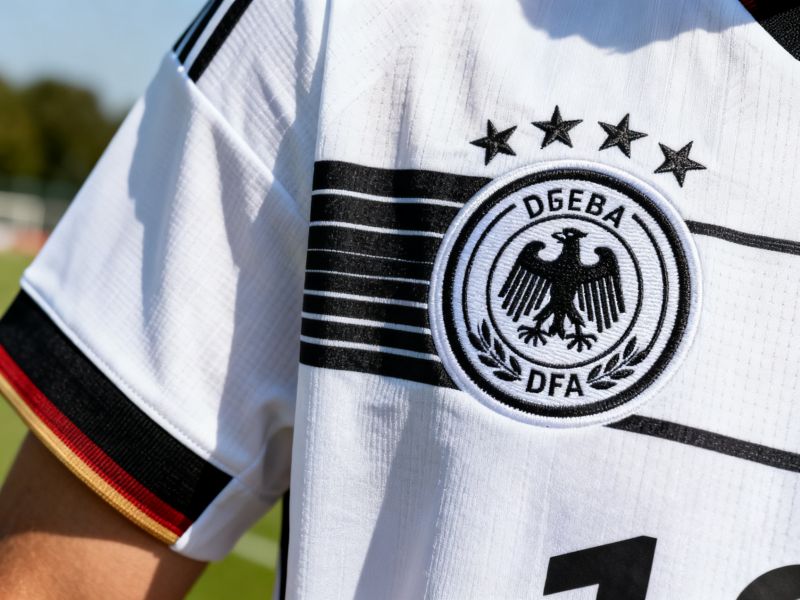
manufacturing discipline, and a fan culture that treats the jersey as everyday wear, not just match-day costume.Start with the design language. The DFB kit has a clear visual identity: white shirt。black shorts, and those three black stripes on the shoulders—Adidas has held the contract since 1954, and the partnership has become part of the jersey's DNA. Simple, right?But simplicity is hard to sustain. Look at the 1990 World Cup shirt, a classic with a subtle geometric pattern across the chest, or the 2014 home kit with its faint red chevron. These designs don't scream. They reward a second glance. That restraint is deliberate. The German jersey rarely chases trends like oversized fits or neon accents;it sticks to clean lines and lets the crest do the talking. Collectors notice. A well-kept 1990 jersey can fetch several hundred euros on resale sites, a sign that the design holds value beyond the season.Manufacturing tells another part of the story. Adidas produces the authentic versions in factories across Asia, but the quality control remains tight—stitching, heat-pressed badges, and fabric weight get checked against strict specs. The replica versions sold to fans use similar materials, often recycled polyester, and the fit has improved over the years. I remember trying on a 2018 replica: the cut was slim but not restrictive, the fabric light enough for a summer match. Compare that to some other national kits where replica means a boxy。scratchy approximation. The German jersey feels engineered, not just printed. That consistency builds trust—fans know what they're getting, whether they pay €90 for a replica or €150 for an authentic.Demand patterns are equally telling. Beyond Germany, the jersey sells well in markets with large expat communities and in countries where the Bundesliga has a following—the US, Japan, and parts of Southeast Asia. You'll spot German jerseys at amateur five-a-side pitches in Brooklyn or Tokyo, worn by players who may never visit the Allianz Arena. The kit has become a neutral choice, almost like a default European football shirt. That broad appeal keeps replica sales steady even in non-tournament years。
which matters for Adidas and the DFB's licensing revenue.What's the takeaway?The German jersey endures because it refuses to overcomplicate things. Clean design, reliable production。and a fan base that wears it casually—these factors reinforce each other. It's not the flashiest kit on the shelf, but it's one of the most dependable. Next time you see a kid in a Berlin playground wearing a Germany shirt with grass stains on the knees, you'll understand: this isn't merchandise. It's uniform.